

.avif)


How poor pruning practices can accelerate tree decline
On Tuesday, February 10, at a solar PV plant located in the municipality of Puertollano, a large holm oak was uprooted inside the facility following the strong winds caused by Storm Marta across the Iberian Peninsula (Photo 1). The tree was part of the natural vegetation preserved during the plant's construction.
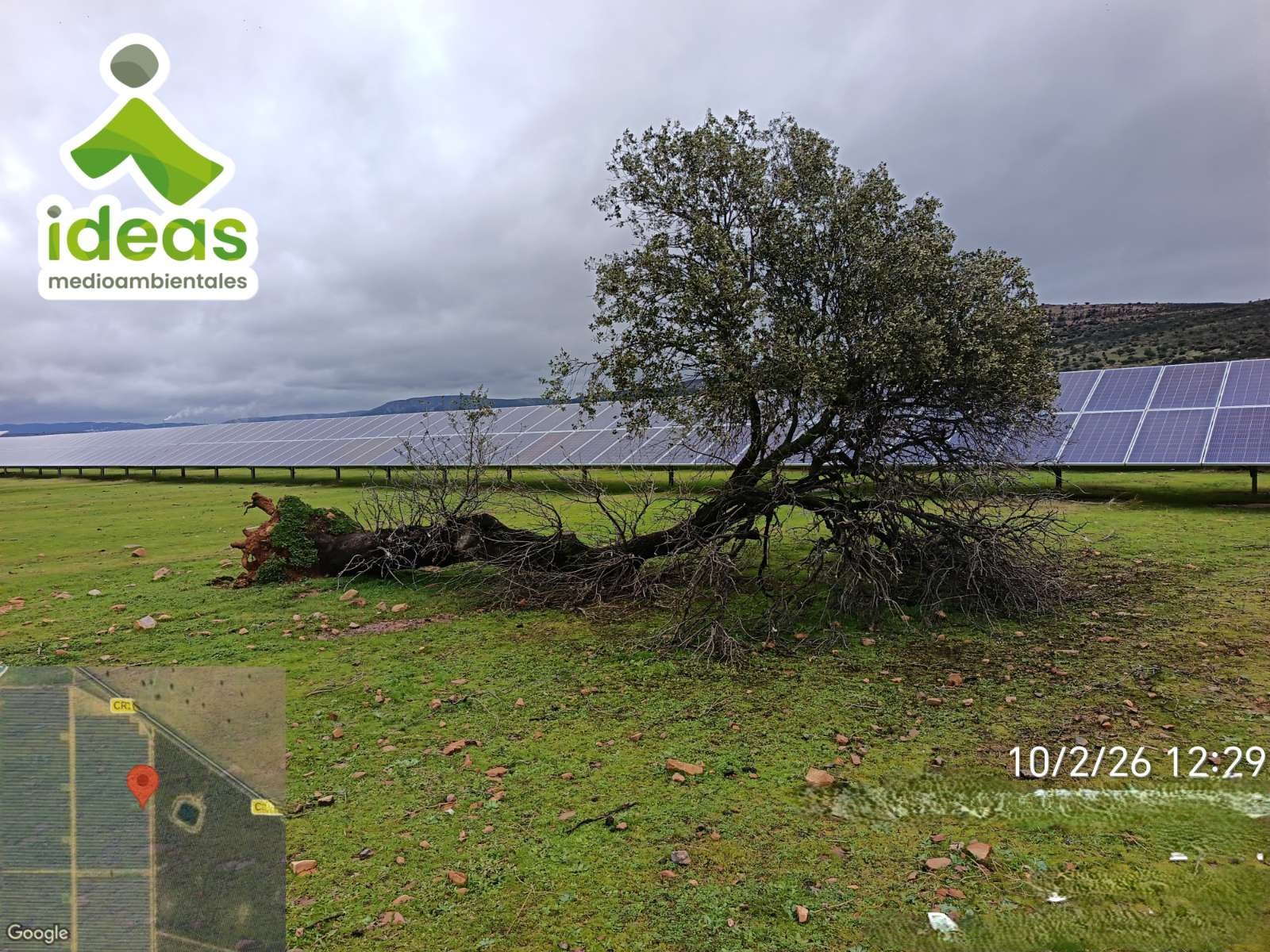
According to meteorological data from the AEMET observatory in Puertollano, the strongest wind gusts during the storm occurred on February 5, reaching 80 km/h from the southwest.
The first thing observed at the site was that half of the tree's canopy was dry, it had previously undergone severe pruning with excessively large wound surfaces, and the root plate—the root ball that had overturned with the tree—was small in both surface area and volume (Photo 2).
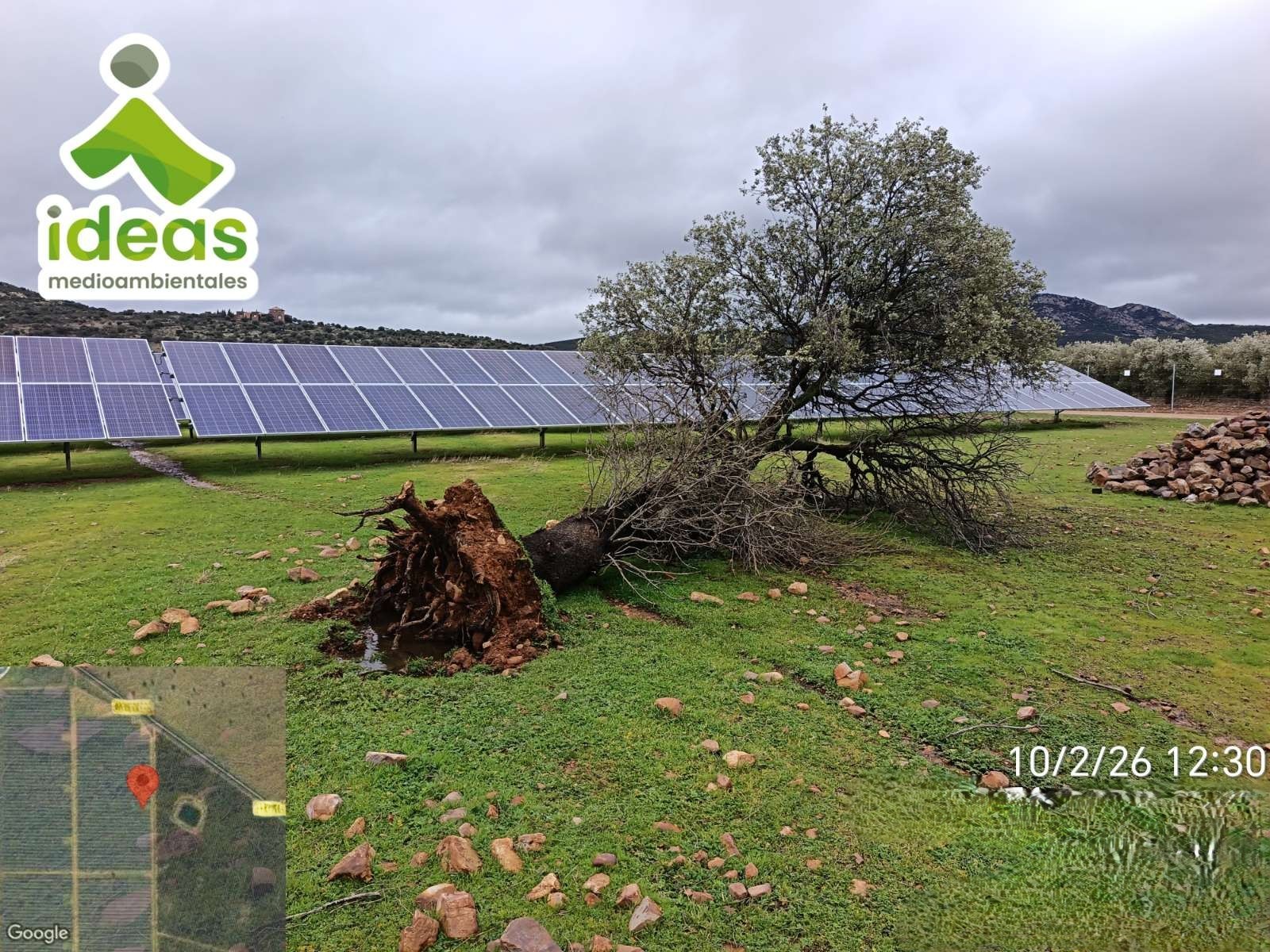
These factors combined led us to suspect that previous silvicultural treatments had created entry points for fungal diseases and caused a loss of vigor. This accelerated the tree's decline, making it vulnerable to attacks by wood-boring insects, fungi, and other rots, which manifested as canopy dieback (Photo 3)—a concept we will cover in future posts—and root damage due to decay in the structural tissue (Photo 4).
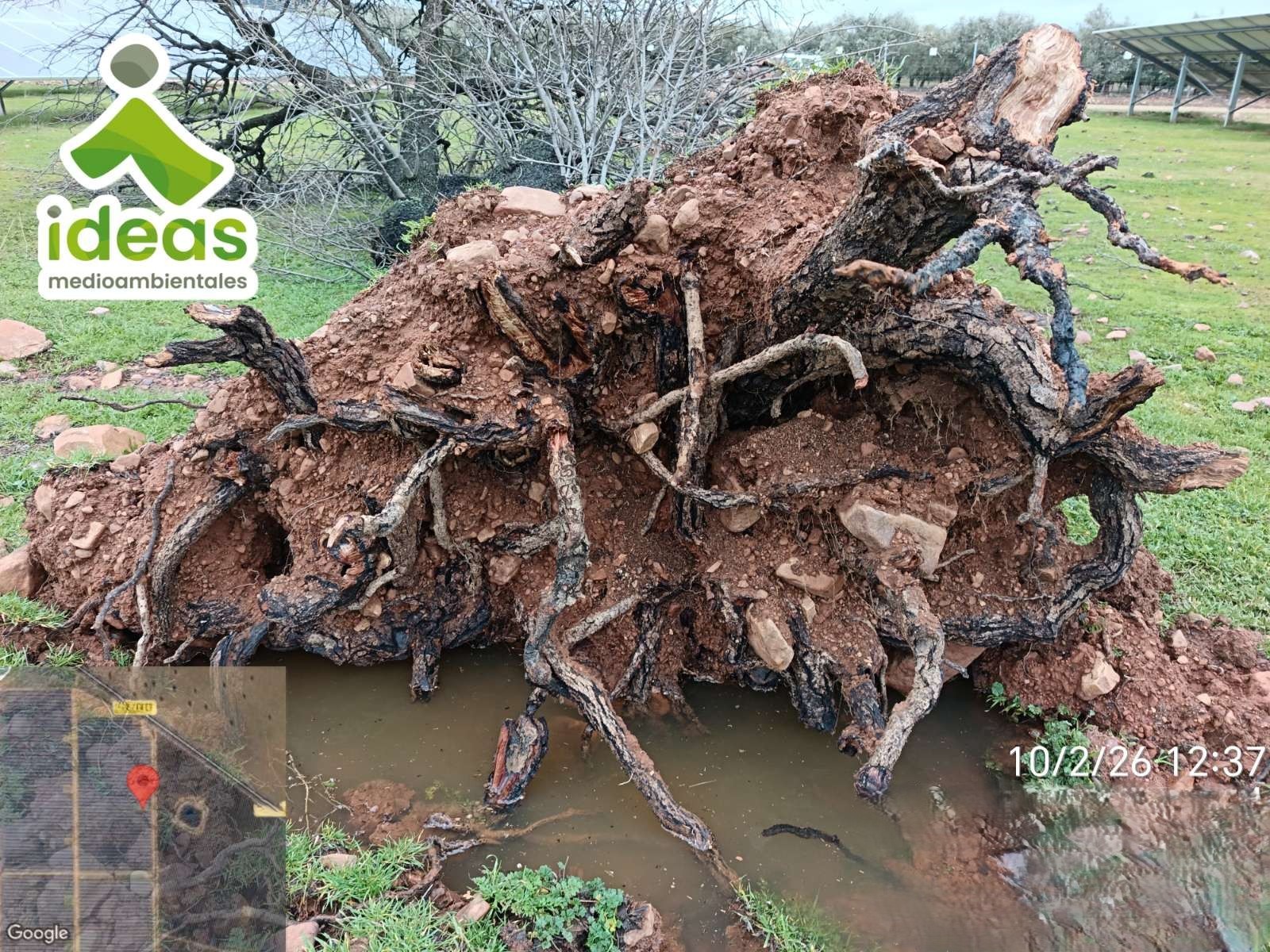
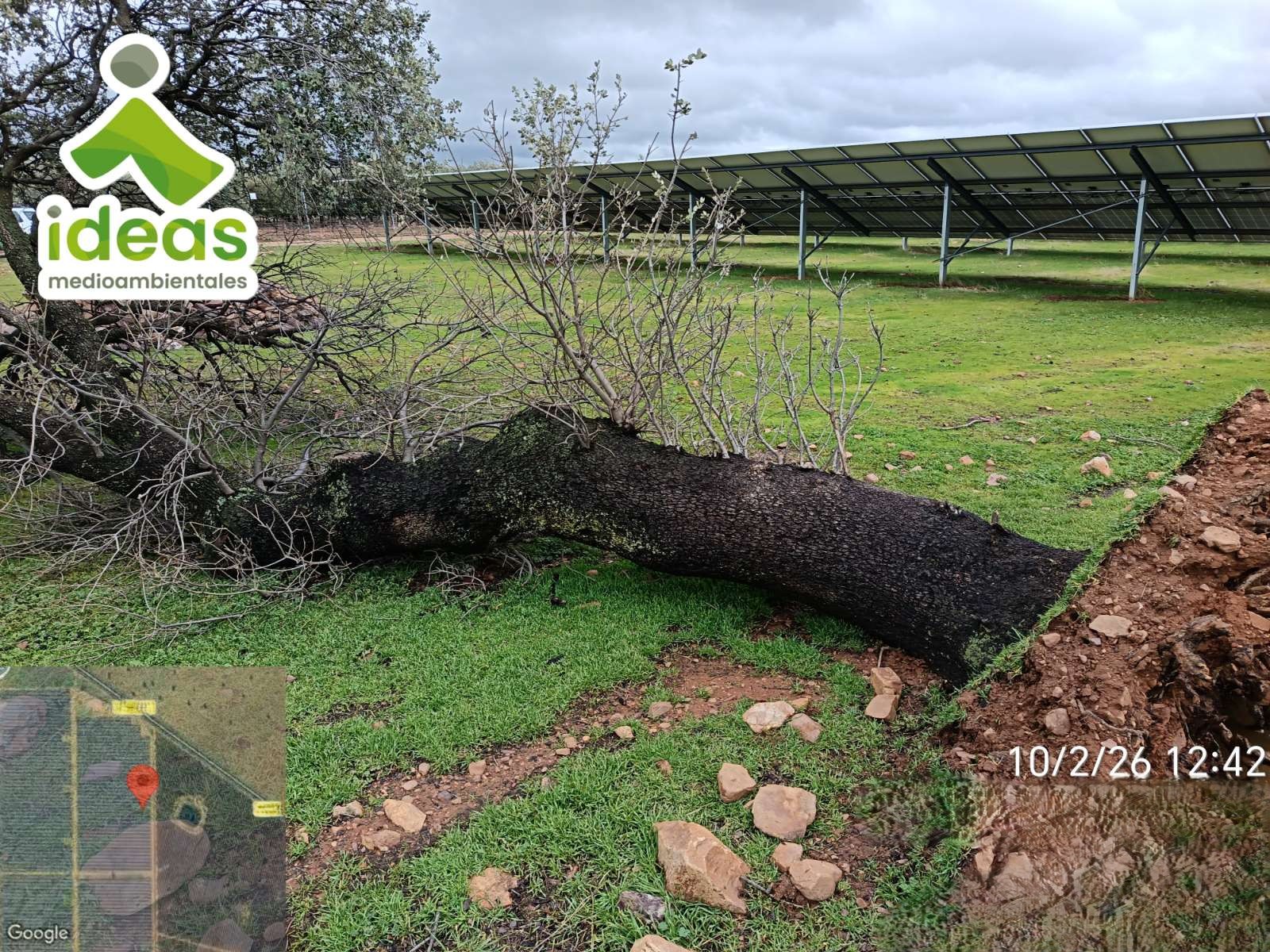
The tree showed two main wounds on its trunk caused by abusive pruning, as the cut sections were excessively large (Photo 5) and, in one case, poorly executed (Photo 6).
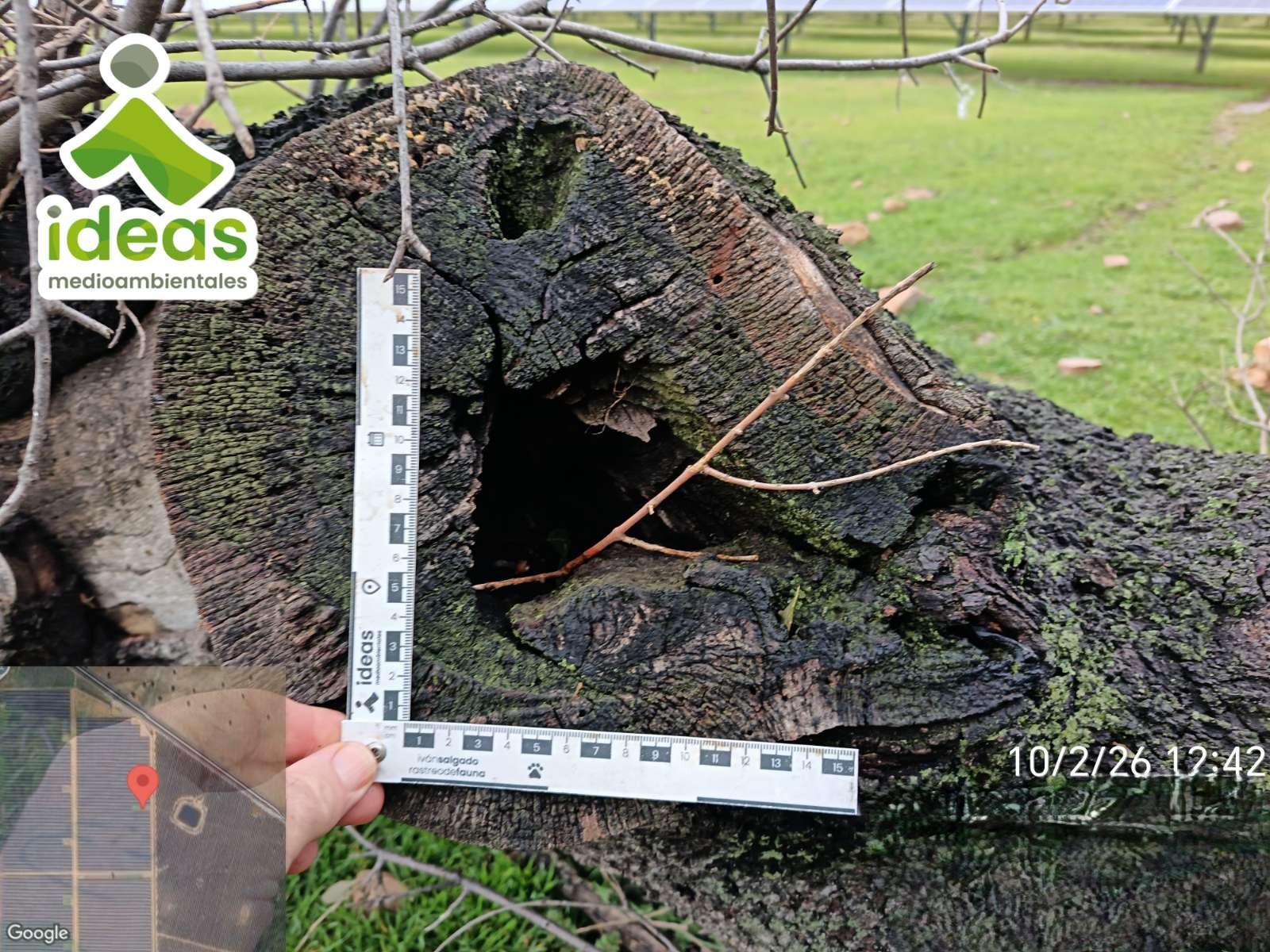
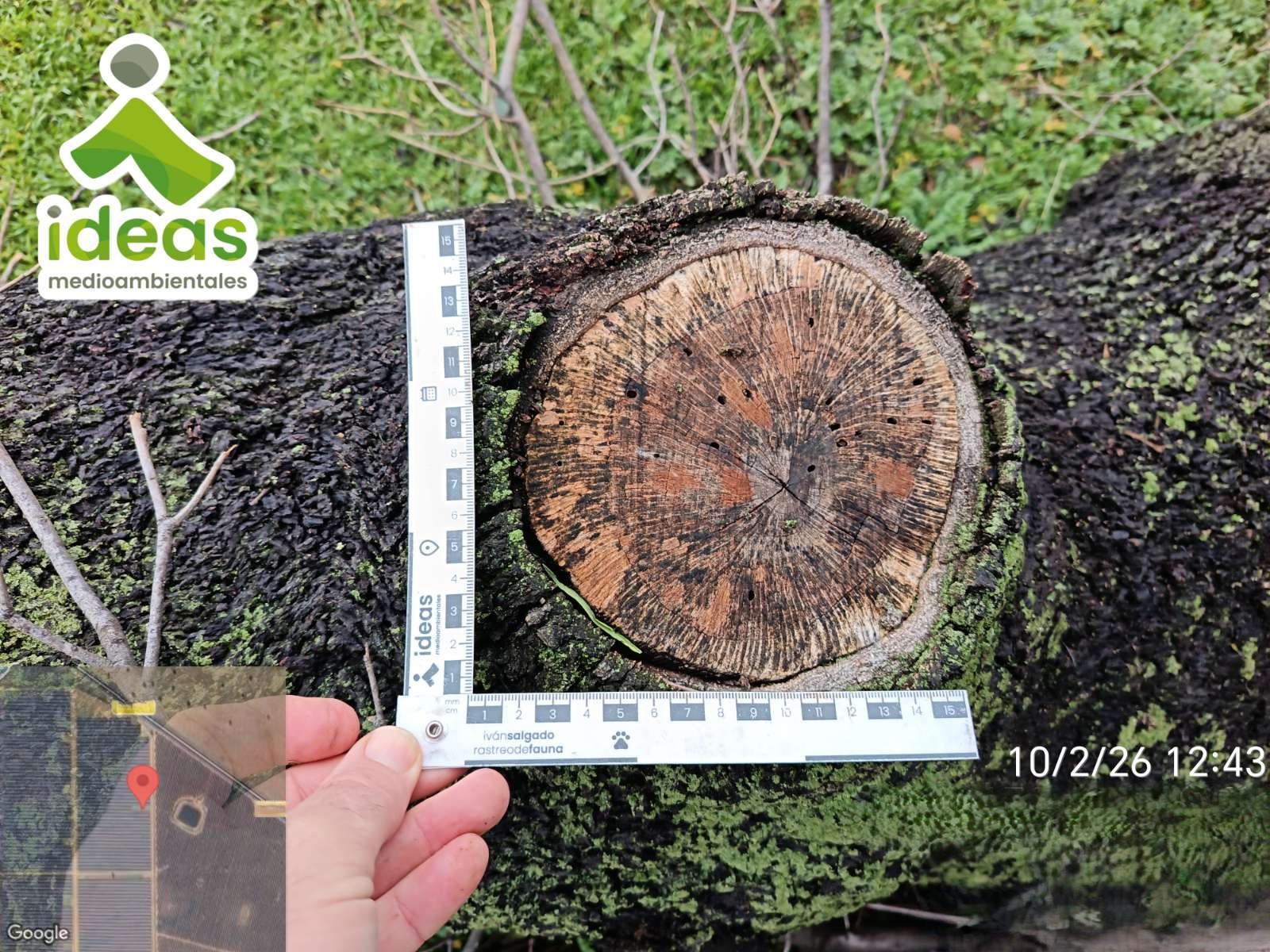
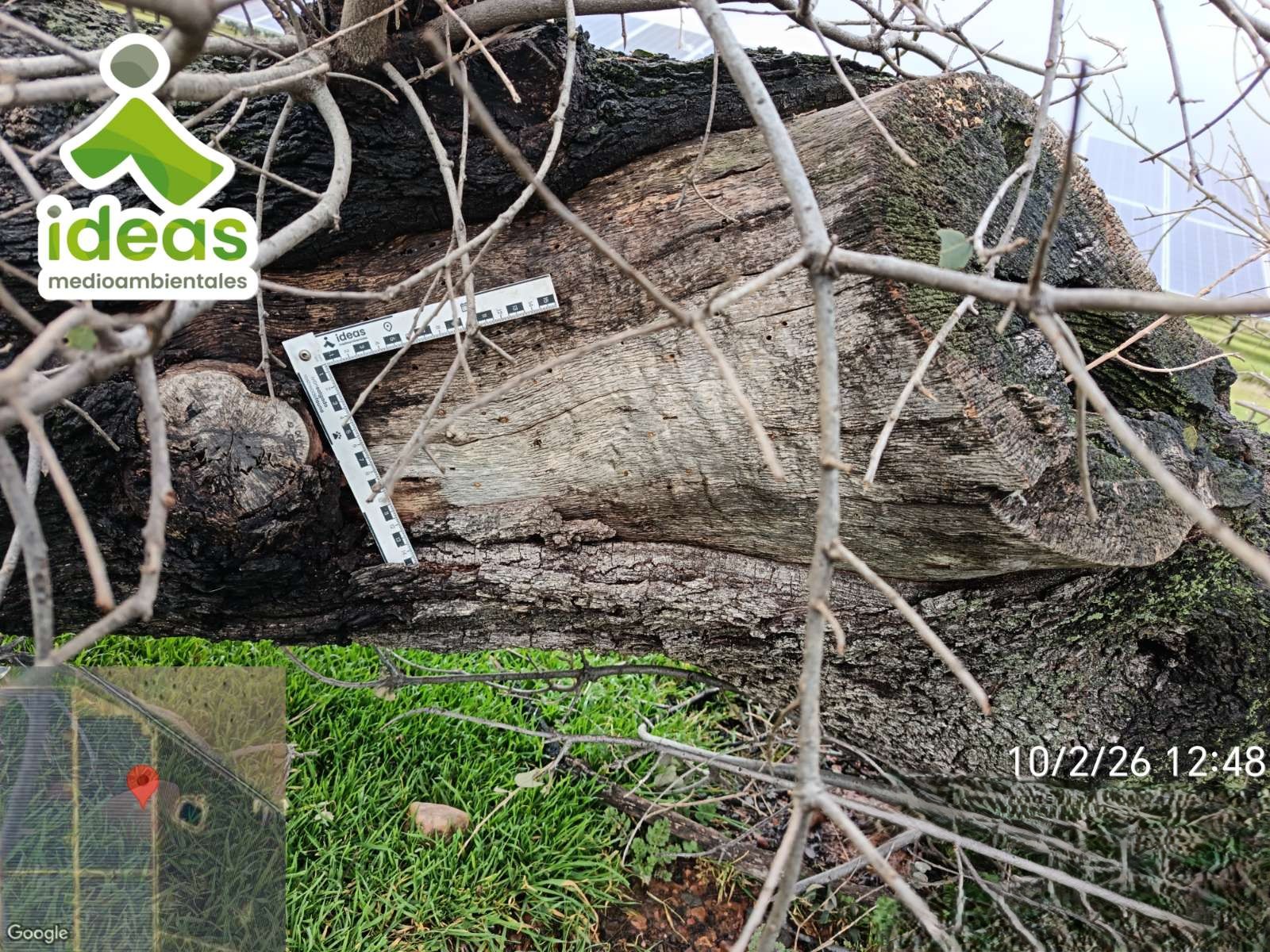
Contrary to popular belief, trees do not heal their wounds; they compartmentalize them (Shigo 1994). Once a branch is cut, the tree attempts to block potential entry points for decay fungi into the cork and phloem vessels. To do this, it creates cellular-level resistance in three spatial directions (Photo 8).
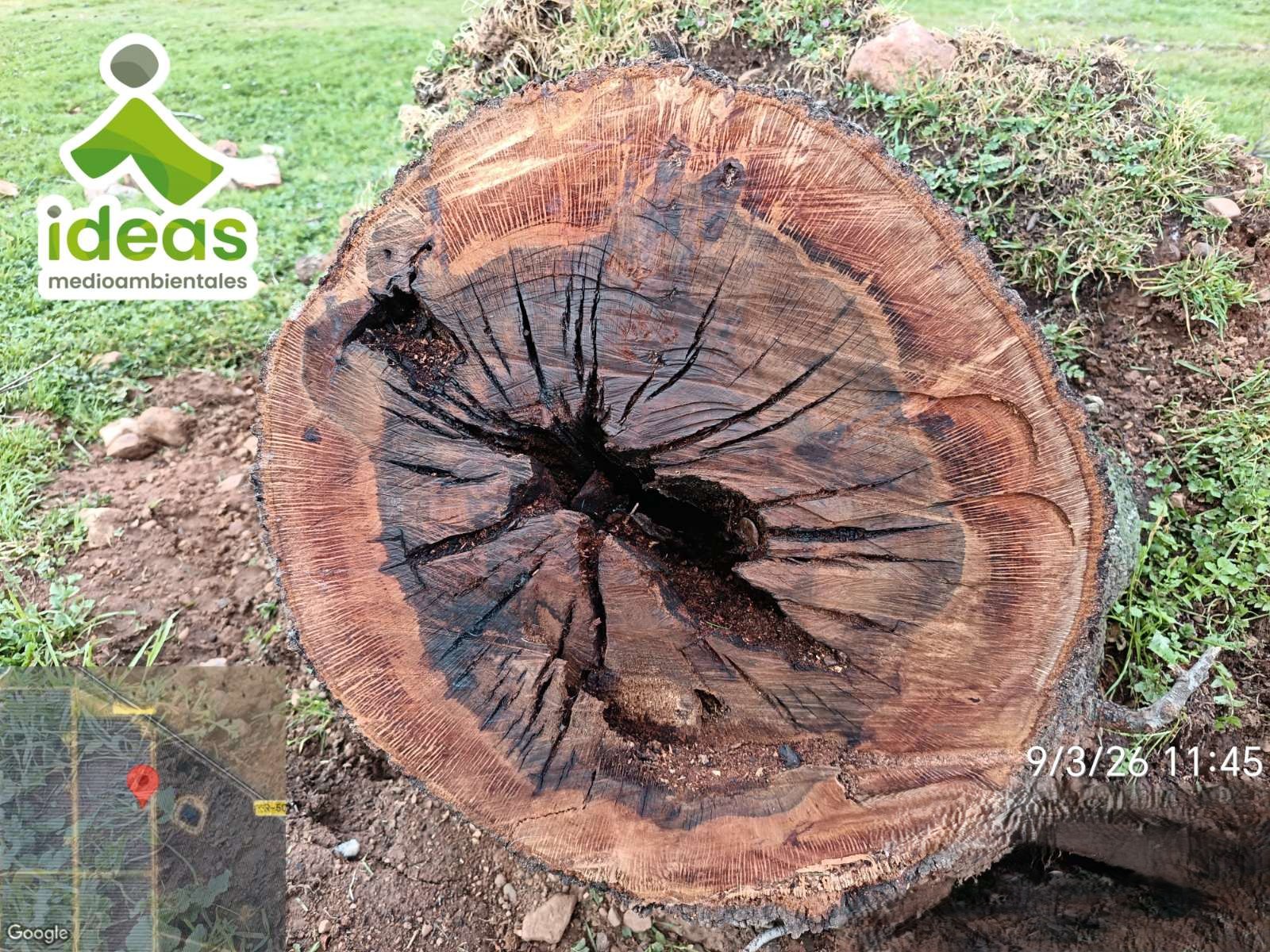
As seen in the image, the darker area corresponds to the fungal invasion overcoming the defenses the tree had built throughout its life. The line separating the darker area from the lighter, living part of the tree is the defense mechanism mentioned earlier.
Ultimately, the combination of poor silvicultural practices, decay fungi, arthropods, time, and weather conditions brought down this monumental holm oak.
At Ideas Medioambientales, we possess the sensitivity and technical training necessary to carry out the cultural practices that monumental or urban trees require in our cities and towns, ensuring their health and safety while allowing them to continue to amaze us with their beauty.
Matías Brotóns Padilla.
.jpeg)
.avif)

.jpeg)


